Separate BMS, measurement and fault ticket systems
BMS and meter integration on a manufacturer-independent data path
Sub-metering, technical operation, defects and building portfolio in a traceable operating model.
BMS and meter integration on a manufacturer-independent data path
Device, place, consumption and work order connection
Portfolio KPI and site breakdown
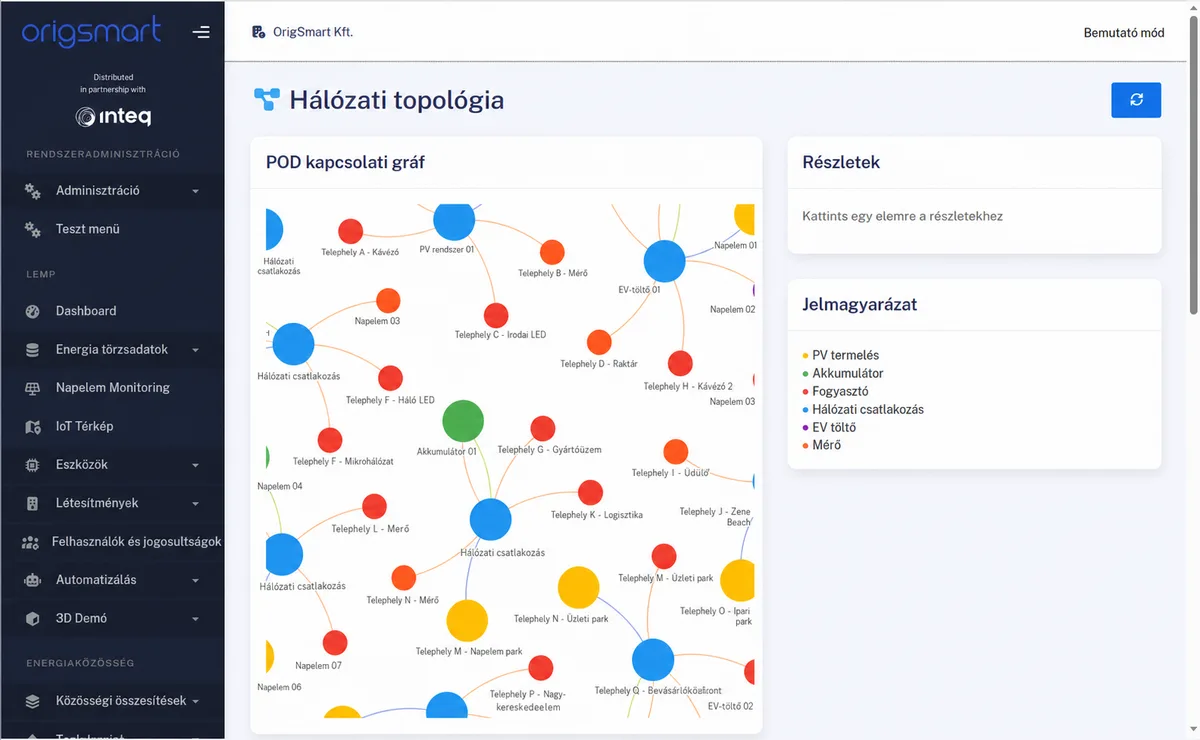
BMS, consumption measurement, fault ticket and maintenance records often live in separate systems. As a result, the same device is registered under several names, and the story between the alarm and the work order is interrupted. The shared asset, location and responsibility model makes it possible for a deviation to be a follow-up measure.
An office building's air conditioner operates four unnecessary hours a day at night. If the average intake of 22 kW and 250 working days is only an illustrative assumption, the difference can be of the order of 22,000 kWh per year. The pilot's task is to compare the operating state and the electrical sub-metering, and then verify whether the excess really disappeared after the time program was modified — without any loss of comfort.
The example is not an offer, a promise of savings or a general compliance requirement; the final technical solution is determined by the on-site and process survey.
In the operational report, the measured fact, the calculated conclusion and the implemented intervention must be separated. In the case of several service providers, authorization and handover are also part of the process. There is no need to replace the control of critical building automation: the platform can be connected to local systems as a monitoring and workflow layer.
At the start, we match the device IDs between the BMS, the measurement system and the maintenance register. You don't need to clean the entire portfolio at once: a building, a mechanical system and a recurring error type are enough to test the model. We determine which alarms will remain the tasks of local automation, which will become a central notification, and which require a work order. Upon acceptance, the measurement history, alarm, intervention and result must be traceable to the same device. This creates the basis for subsequent portfolio-level comparisons.
In the first phase, the following two areas will be inspected: main and submeters, BMS data points, comfort and air quality values, and operating hours, switching status and error codes of mechanical equipment. Connecting all sites, devices and historical data at the same time is not the goal. First, we verify that a reliable decision and a work process that can be closed are made from the selected data. To finalize the scope, two questions are particularly important: Which system owns the device and location identifiers? Which intervention remains exclusively in the local BMS? The answers determine the device count, integration task, local data storage, roles, and acceptance test.
Locations, data sources, responsible persons and success criteria.
Controlled connection of designated measurement points and systems.
Dashboard, alert and at least one actionable workflow.
Result, list of deficiencies and quantifiable expansion proposal.
During a short technical consultation, we select the measurement or operating point at which the value of the pilot can be checked.
Pilot consultation