⌁
Data connection
Integration of IoT, API, database and external systems.
One shared, modular environment connects devices, data, users, business applications and executable workflows.
The common cores ensure uniform operation, and the modules provide solutions for specific tasks of the organization.
Integration of IoT, API, database and external systems.
Devices, locations, clients and document relationships.
Events, Notifications, Tasks and Automation.
Desktop, mobile and field interfaces by role.
A measurement deviation does not stop at the dashboard: it can trigger a notification, a task or a business process.
Provides sensor, meter, gateway or external system data.
The data is related to device, location and organizational manager.
Interpreted by rule, threshold, trend or business logic.
An alert, work order, approval, billing and allocation or report is created.
These anonymised screens show real platform functions. Open any image for a larger view.
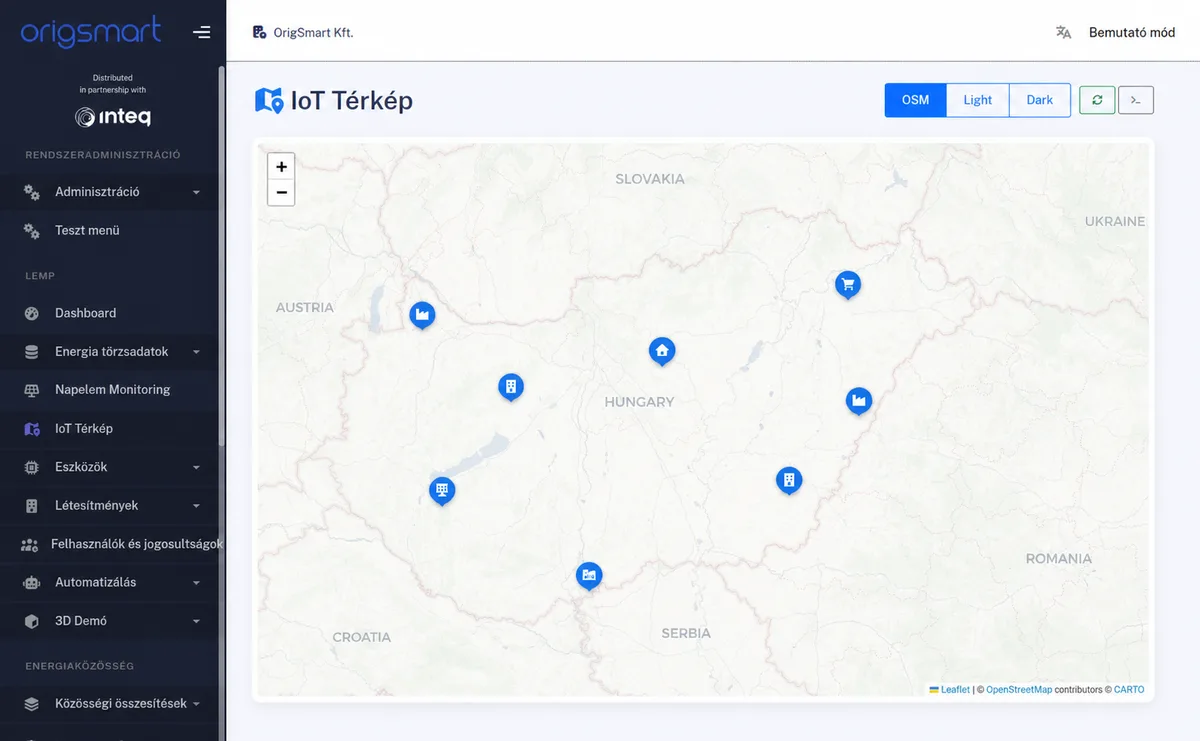
Sites, devices and events appear in a shared geographical operating view.
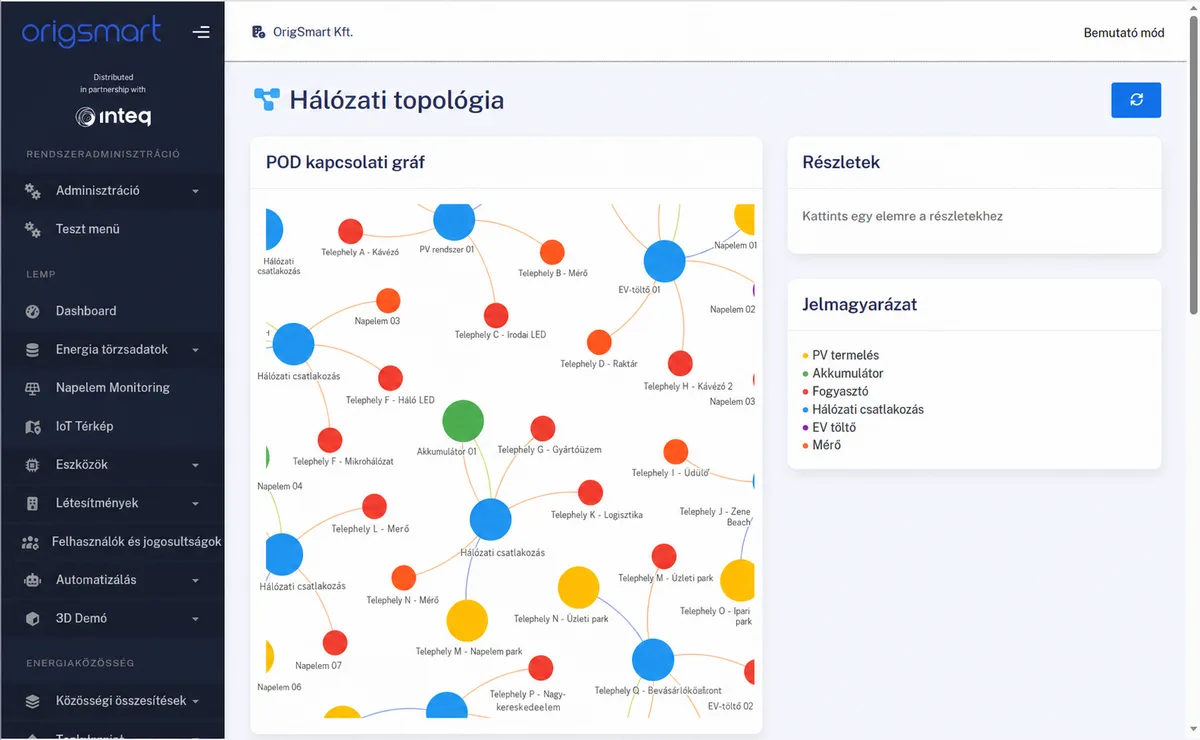
The relationship graph presents grid points, producers, consumers and storage together.
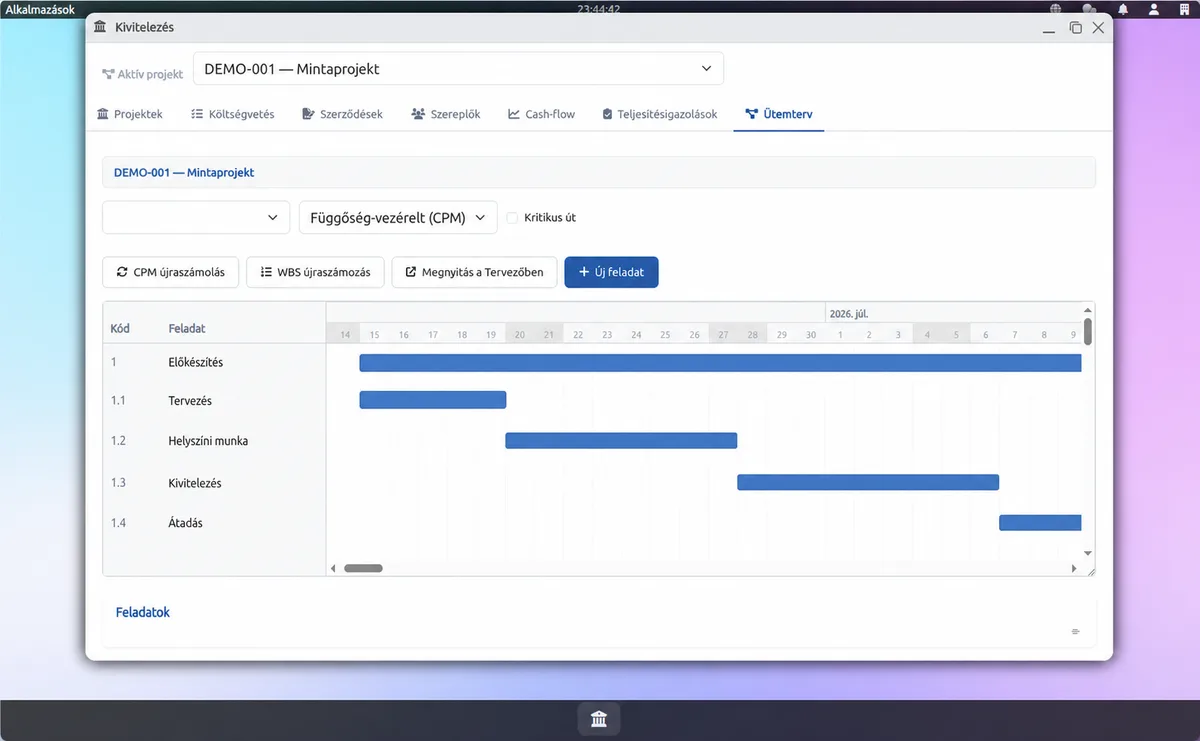
Tasks, dependencies and deadlines remain connected to the same project.
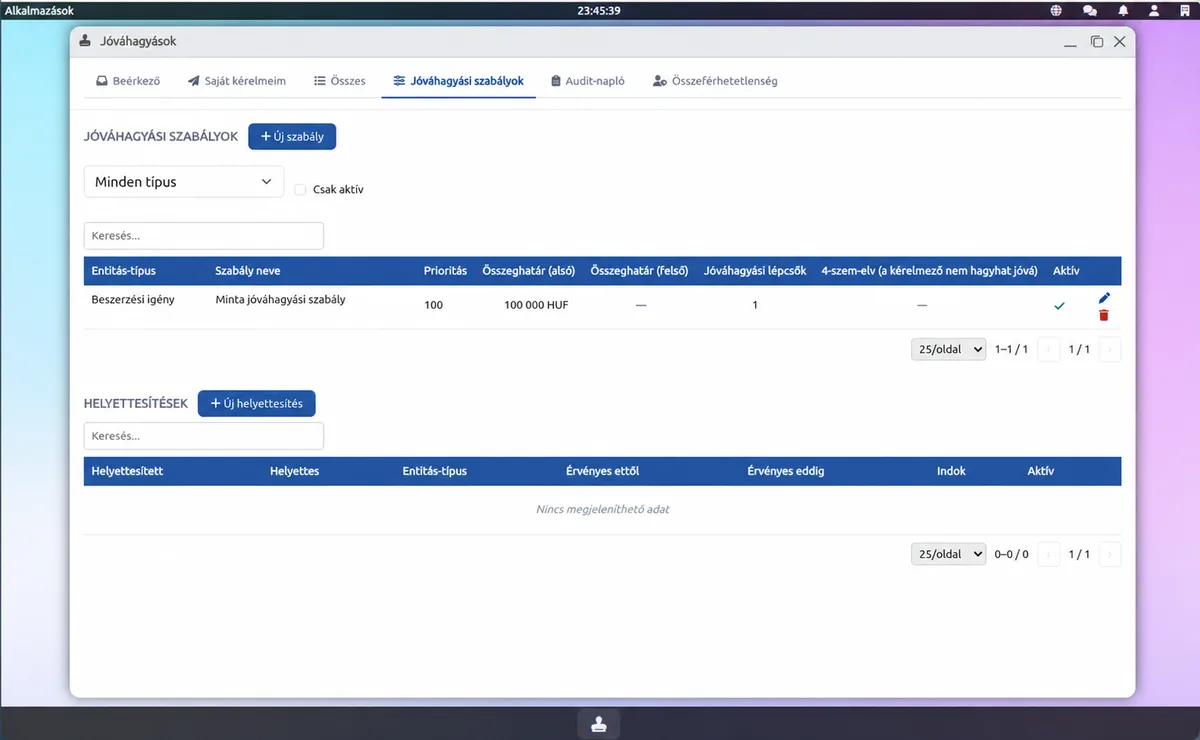
Value limits, approval stages and substitutions create an auditable business process.
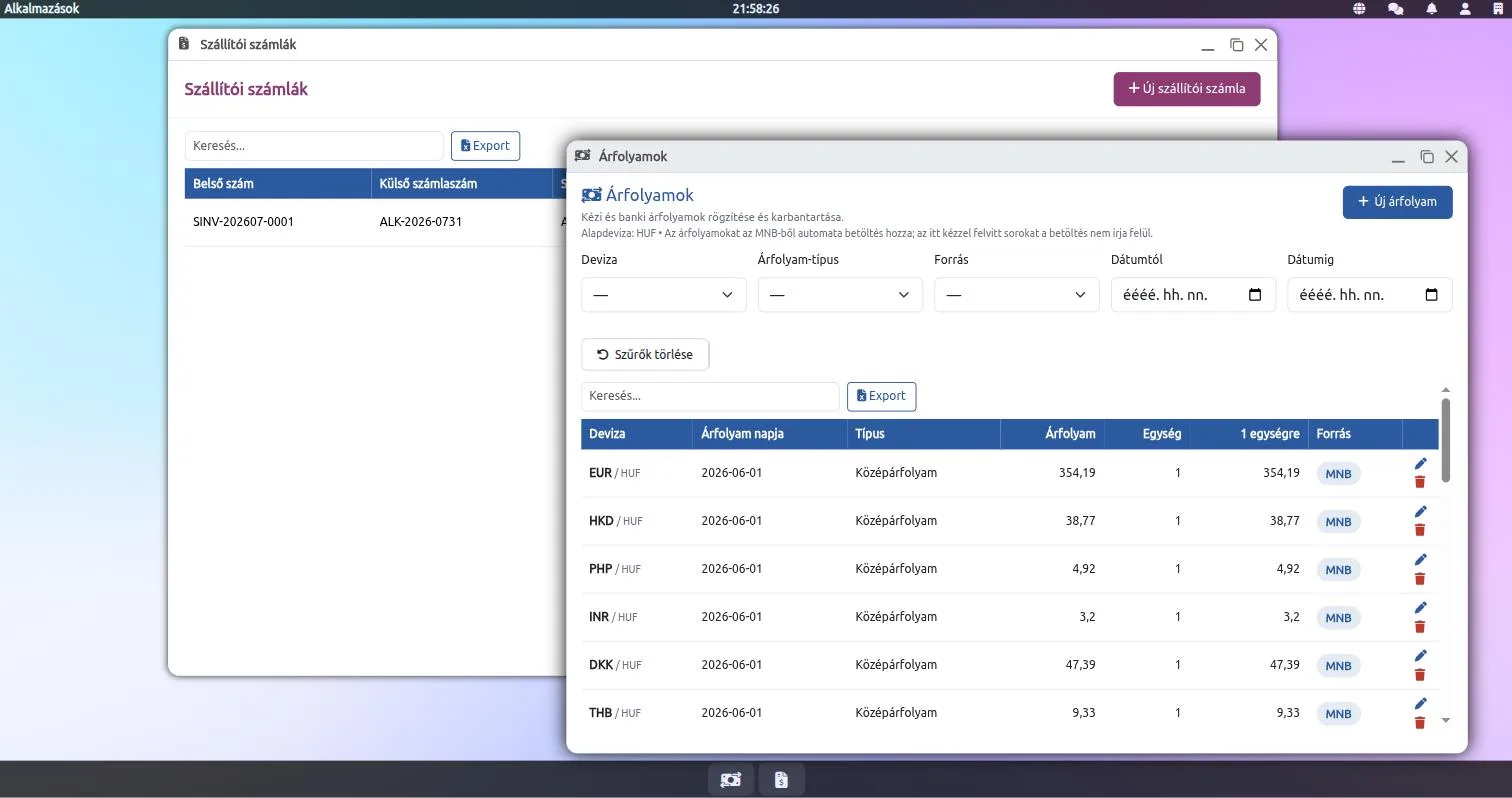
Supplier invoices, currencies and MNB-sourced or manually recorded exchange rates are managed in the same business environment.
| Principle | What does it mean in practice? |
|---|---|
| One dataset, one place | Common data is not copied to all modules; functions are associated with the same authoritative record. |
| Modular rollout | You can start with a narrow use case, while maintaining the necessary foundations for later expansion. |
| Integrability | Existing devices and systems do not necessarily need to be replaced; they can be connected via regulated interfaces. |
| Authorization and organizational boundary | Users and devices have access only to the data and operations authorized for them. |
| Traceability | The source of events, automated decisions and business operations can be linked. |