Documents that live in multiple versions
Linking task, responsible person, deadline and location
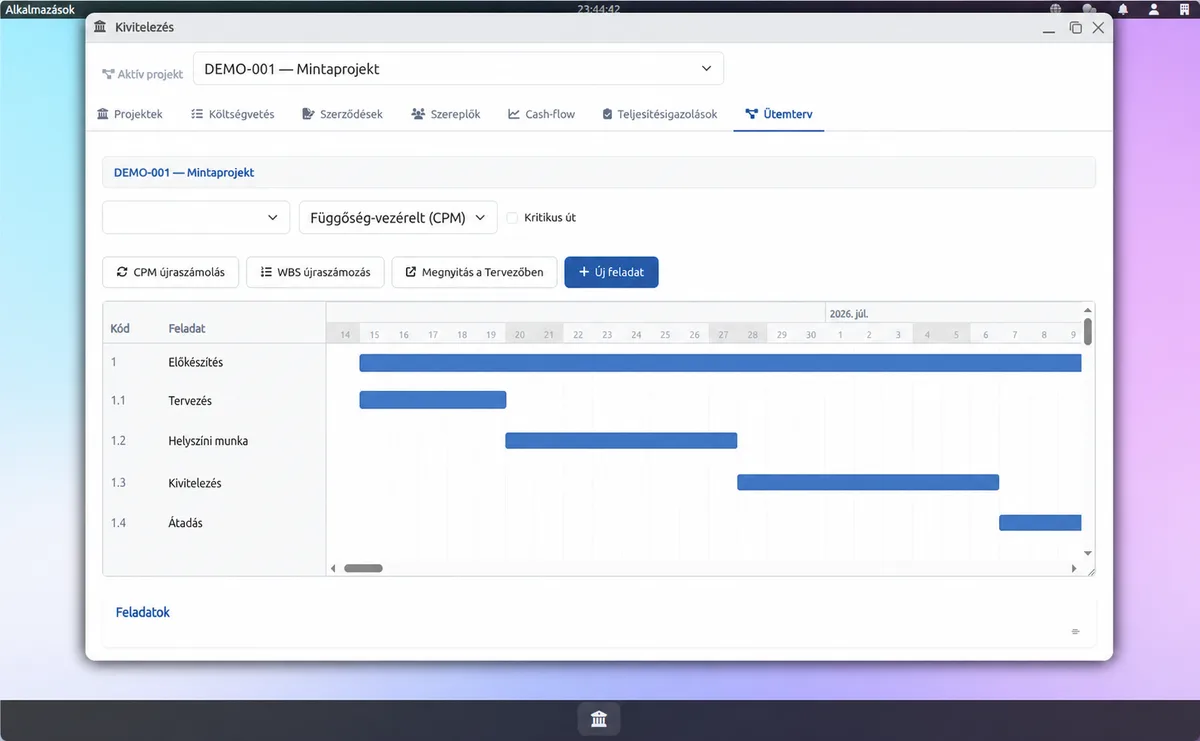
Schedule, technical document, site event and cost linked to the same project.
Linking task, responsible person, deadline and location
Field recording and controlled document library
Milestone, cost and variance tracking
In a construction project, it is not the lack of data, but the scattering of versions, responsible persons and evidence that causes the most controversy. The plan, location, task, photo, minutes and approval can be used if they are related to the same work part and time, can also be recorded on a mobile phone and retrieved later.
For an 80-room handover, six inspection points per room already mean 480 items. If there are two photos, a person responsible and a deadline for each error, the current status is quickly lost in the table. The pilot shows at a designated level how the open, corrected and reviewed items are separated and how long it takes from recording to closing.
The example is not an offer, a promise of savings or a general compliance requirement; the final technical solution is determined by the on-site and process survey.
The value of a digital trail is in version identity and authorization. A photo is only evidence if the time, place, related task and uploader of it are known. The BIM model can be a navigation and context layer, but the daily construction process should not be tied to the detail of the model.
For the rollout, we designate a delimitable work area and create a uniform location identification. Roles, task statuses, required evidence and approval points are recorded before the first mobile walkthrough. Real errors or inspection items run from capture to correction to re-inspection. We measure the turnaround time, the number of re-openings and incomplete closures separately. Upon acceptance, the handover status, documents and open items of the selected area should be checked from a single view, with an exportable trace. This will reveal whether the method can be sustained for a larger part of the project.
In the first phase, the following two areas will be inspected: task structure according to location, level, room and work part, and plan and document version, comments and approval status. The goal is not to connect all sites, devices and historical data at the same time. First, we verify that a reliable decision and a work process that can be closed are made from the selected data. To finalize the scope, two questions are particularly important: Which part of the work causes the most retrieval time today? Which documents are included in the transfer package? The answers determine the device count, integration task, local data storage, roles, and acceptance test.
Locations, data sources, responsible persons and success criteria.
Controlled connection of designated measurement points and systems.
Dashboard, alert and at least one actionable workflow.
Result, list of deficiencies and quantifiable expansion proposal.
During a short technical consultation, we select the measurement or operating point at which the value of the pilot can be checked.
Pilot consultation